English
 русский
Content
As the adoption of electric vehicles (EVs) continues to grow globally, thermal management has become an increasingly important area of focus for automakers and manufacturers of EV components. One of the critical challenges in designing electric vehicles is ensuring that the battery system operates efficiently and safely under various driving conditions. Efficient thermal management is key to maximizing the performance, longevity, and safety of EV batteries, and this is where liquid cold plates come into play.
Liquid cold plates are an advanced thermal management solution that uses liquid coolant to regulate the temperature of the electric vehicle’s battery and other high-power components, as opposed to traditional air cooling systems. While air cooling has been widely used in conventional vehicles and some early EV designs, the increasing energy density of EV batteries and the demand for higher performance necessitate more efficient cooling technologies. In this article, we will explore the advantages of using liquid cold plates over air cooling in electric vehicles, highlighting their role in improving efficiency, performance, and overall vehicle safety.
1. Understanding the Basics: Liquid Cold Plates vs. Air Cooling
Before diving into the advantages, it’s essential to understand how these two cooling systems operate and how they differ.
Air Cooling:
Air cooling in EVs typically involves fans and ducts that circulate ambient air around the battery pack to carry away excess heat. This method is simple and inexpensive, but it has limitations when it comes to high-performance EVs, where temperature regulation is crucial for battery health and efficiency.
Liquid Cooling with Cold Plates:
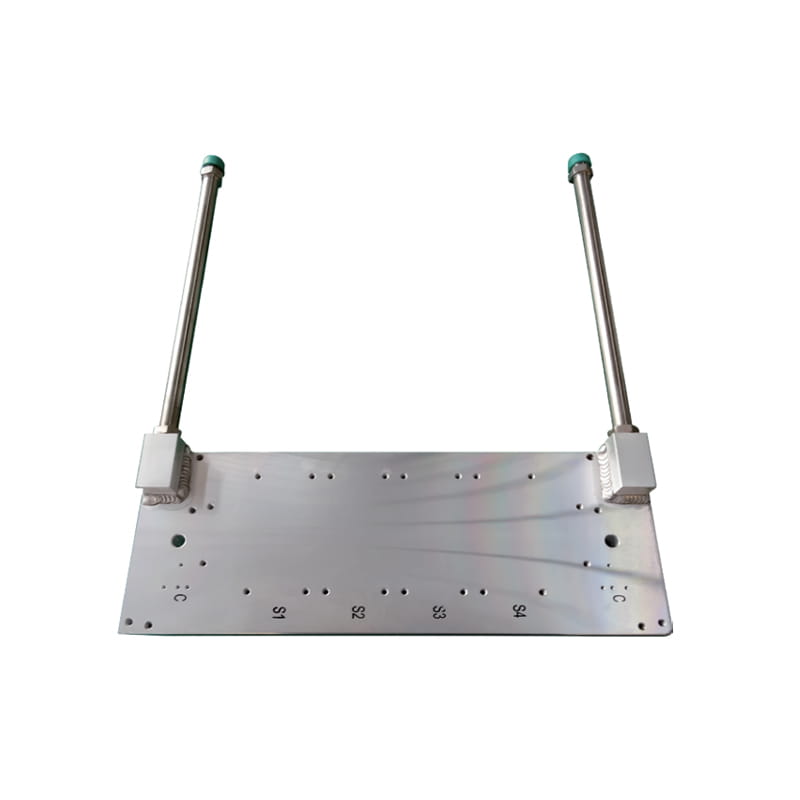
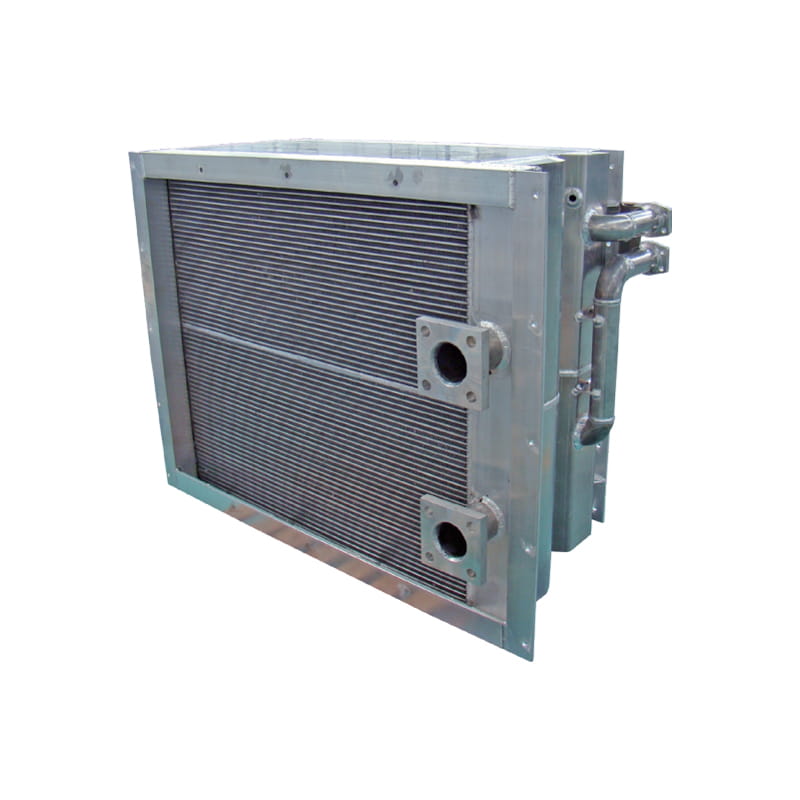
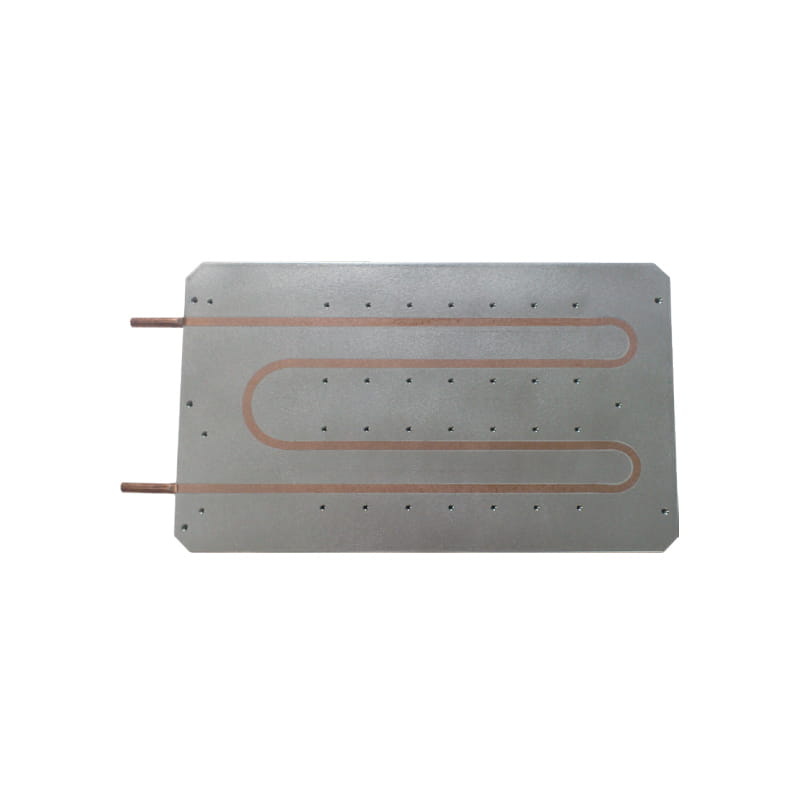
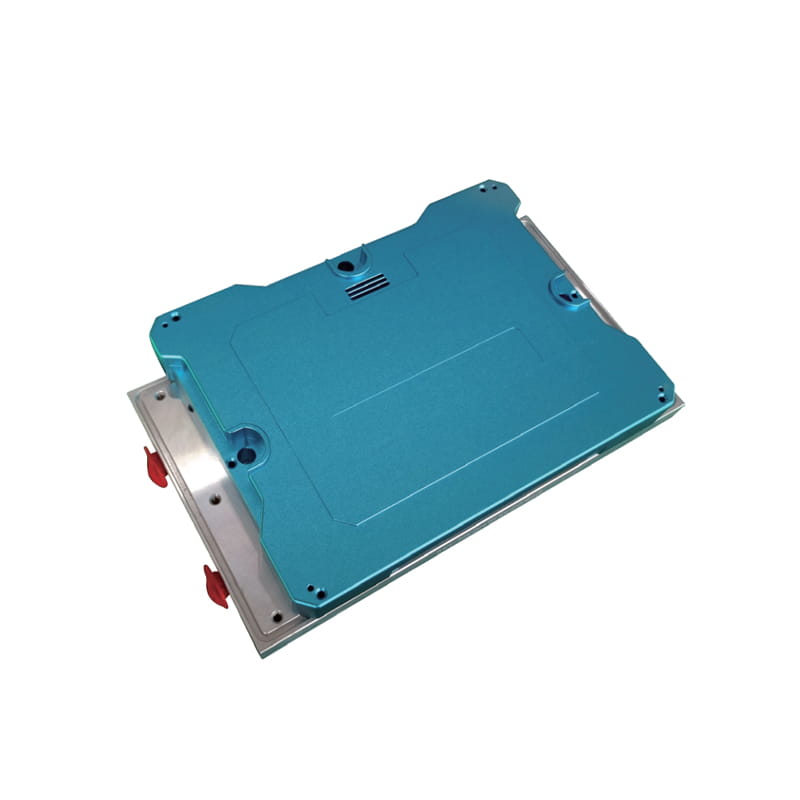
Liquid cooling involves circulating a coolant (typically water-based) through pipes that run through the battery pack, where the coolant absorbs the heat. This coolant is then cooled through a radiator or heat exchanger. Cold plates are metal plates, often made of copper or aluminum, with internal channels through which the coolant flows. These plates are directly attached to the battery cells or other critical components, providing more efficient heat dissipation.
2. Advantages of Liquid Cold Plates Over Air Cooling
2.1 Enhanced Cooling Efficiency
The most significant advantage of using liquid cold plates over air cooling is the efficiency of heat transfer. Liquid coolant has a much higher thermal conductivity compared to air, which means it can absorb and transfer heat more effectively. This efficiency is particularly important in electric vehicles, where the high-energy density of lithium-ion batteries generates a substantial amount of heat.
- Air cooling has limited capacity to absorb and carry away heat, especially in high-power applications like fast charging or high-speed driving, which can cause the battery temperature to rise rapidly.
- Liquid cooling, on the other hand, can provide more consistent and rapid cooling, as the liquid can carry heat away from the battery much faster than air, even in challenging conditions.
This enhanced cooling capability helps ensure that the battery operates at optimal temperatures, improving both performance and safety.

2.2 Better Temperature Control for Battery Longevity
Battery longevity is a critical concern in electric vehicles, as excessive heat can degrade the chemical components of the battery, reducing its capacity and overall lifespan. Thermal runaway, which can lead to fires or explosions, is also a significant safety hazard associated with batteries operating at high temperatures.
- With air cooling, temperature variations can be more significant, and achieving uniform cooling across the battery pack can be difficult. This can lead to uneven temperature distribution, where some cells may overheat while others remain cooler.
- Liquid cold plates, by contrast, provide precise and uniform cooling, reducing the temperature gradient between individual cells and ensuring the battery operates within an optimal temperature range. This reduces the likelihood of hot spots, prevents thermal runaway, and extends the overall lifespan of the battery.
By maintaining the battery at a stable, optimal temperature, liquid cold plates contribute directly to increased energy efficiency and longer battery life, which are critical considerations for consumers and manufacturers alike.
2.3 Compact and Lightweight Design
Liquid cooling systems with cold plates are generally more compact and lightweight than air cooling systems, especially for high-performance vehicles.
- Air cooling systems require large fans, ducts, and vents to circulate air through the battery pack, which can take up significant space and add weight to the vehicle. These components can be bulky, reducing the available design flexibility for the overall vehicle and increasing the vehicle’s weight, which impacts range and efficiency.
- Liquid cold plates are integrated more efficiently into the design, occupying less space and allowing for a more streamlined and compact system. The coolant channels can be routed more easily through the battery pack, taking up less space while providing better cooling.
This space-saving and weight-reducing aspect of liquid cooling can contribute to increased overall vehicle efficiency and improved driving range, both of which are important selling points for electric vehicles.
2.4 Superior Performance in High-Power Applications
In high-performance EVs, such as those used for racing or long-distance travel, the power demands on the battery system are significantly higher. Under these conditions, the generation of heat is more pronounced, and air cooling systems may struggle to keep up.
- Air cooling is not as efficient at removing large amounts of heat quickly, particularly during high-speed driving or fast charging scenarios. The air-based systems may fail to maintain optimal temperatures, leading to overheating and reduced battery performance.
- Liquid cooling systems with cold plates are designed to handle high power and high heat loads, making them better suited for these high-demand scenarios. By using liquid coolant to remove heat more efficiently, the system can maintain consistent battery temperatures, preventing performance drops and potential damage to the cells.
The ability of liquid cold plates to maintain stability during extreme performance conditions makes them essential for high-performance electric vehicles.
2.5 Reduced Risk of Noise and Vibration
Another benefit of liquid cooling systems is their relatively low noise levels compared to air-based systems. Air cooling typically requires large fans to circulate air through the system, which can generate significant noise and vibration during operation.
- Liquid cooling systems, particularly those using cold plates, are generally much quieter because they do not require large moving parts like fans. The coolant flows through the channels without generating significant noise, making the driving experience quieter and more comfortable.
This noise reduction is particularly beneficial for premium EVs, where comfort and quiet performance are important considerations for buyers.
2.6 Greater Flexibility in System Integration
Liquid cooling systems, especially those using cold plates, are highly versatile and can be integrated more easily into various battery pack designs and vehicle architectures.
- Air cooling systems are more constrained by the need for space to install fans, ducts, and vents, limiting the flexibility of the design and layout of the vehicle.
- Liquid cold plates can be integrated more seamlessly into a wider range of configurations, offering greater design flexibility. The use of coolant channels and cold plates allows for customization and optimization of the cooling system to fit the specific needs of the battery pack and other high-power components.
This design flexibility enables automakers to create more efficient, space-saving, and aesthetically pleasing cooling solutions for electric vehicles.
3. Conclusion
The advantages of using liquid cold plates over air cooling in electric vehicles are clear: enhanced cooling efficiency, better temperature control, improved battery life, a more compact design, and superior performance in high-power applications. As electric vehicles become more advanced, with increasing battery capacities and performance demands, liquid cooling with cold plates offers a superior thermal management solution that ensures safety, efficiency, and reliability.
While air cooling systems may still be suitable for some entry-level or low-performance EVs, liquid cold plates are increasingly the preferred choice for high-performance and long-range electric vehicles. The combination of precise temperature control, increased energy efficiency, and design flexibility makes liquid cold plates an essential technology for the future of electric vehicles.
As EV technology continues to evolve, liquid cooling systems will play a central role in optimizing performance, extending battery life, and providing a safer, more enjoyable driving experience for consumers worldwide.